
Observations from Western Springs
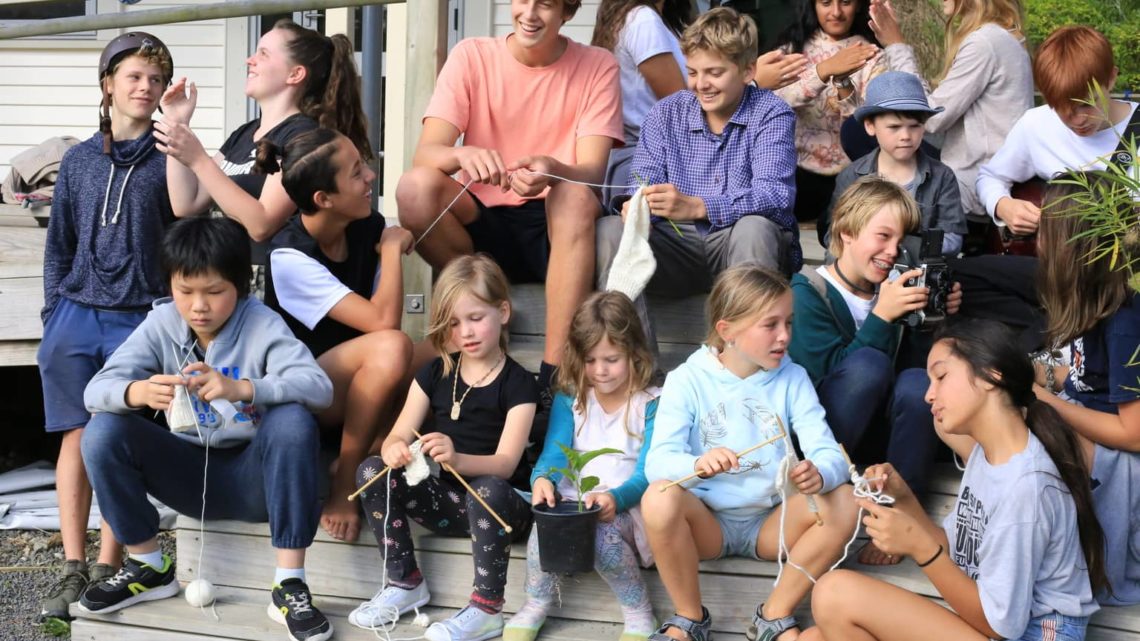
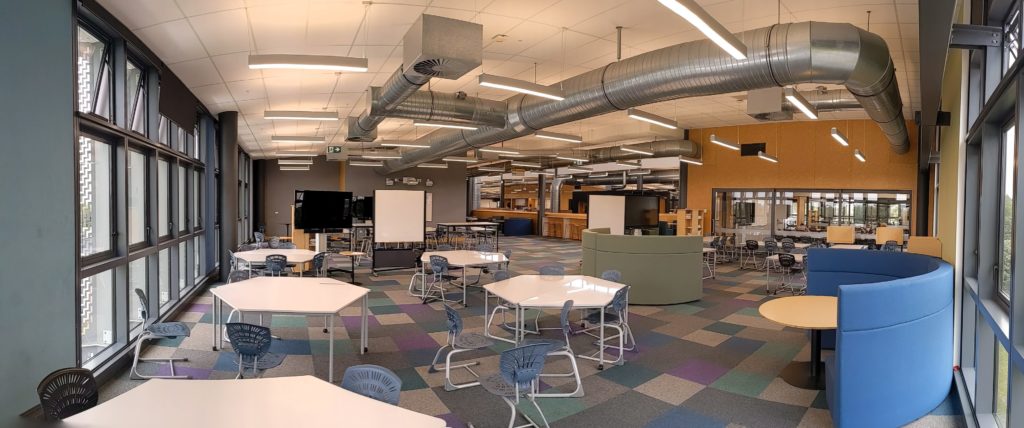
Initially I was greeted in what seemed like a normal school office environment, although I signed in digitally and the sticker printer printed out a name tag, already highlighting the high-tech nature of Western Springs College / Ngā Puna O Waiōrea [Hereafter, WSCW]. Upon entering their main building I was in shock; such a beautiful building; temperate, new, clean, open and light. In stands in stark contrast to our own schools learning blocks – which are old, sometimes painfully, either too hot or too cold, dilapidated, ripped curtains and gum on desks. Two wonderings immediately came from this; the first, how does the MoE decide what school project to fund, and why did WSCW need this new building?1
I’m still not sure of the answer to either of questions, but suffice to say the process is complex. However, I do understand that schools have 10 year plans [10YPP] which they submit to the MoE for consideration. These 10YPP can include new buildings or seek additional funding from the MoE for upgrade work to the school .
Innovative Learning Environment
In the past few years, the Ministry of Education has been building schools that are Innovative Learning Environments [ILE]. ILE includes the pedagogical practices, physical spaces and how people use the environment socially. Quality Learning Environments [QLE] refer to the physical building structure only . ILE and QLE extend far beyond the classroom to include other areas of the schools and especially wharenui and wharekai among other spaces .
Many strands of though go into creating innovative learning environments. In terms of teaching, pedagogy necessarily has to change to take into account the new physical environment. I discussed this with the HoD of Mathematics; he suggested that teaching changes had been less of an idealogical or philosophical shift and more related to on-the-ground practicalities of teaching in a new space. What I noticed from my classroom observations is little teacher time at the front of the class, more time for student exploration. Assessments were often project based, with students helping each other for parts of the project, and other parts were individual work. To maintain authenticity of assessment, they used students’ ID numbers to add some element of randomness to the calculations they needed to do (for example, in the Y10 shape/number assessment).
It is interesting the extent to which the built environment impacts pedagogy. From my own experience at MRGS, teachers are more likely to teach in a traditional way in their classrooms. When you have a lot of space at the front of the room, you tend to use that as the teaching space. That being said, there is still some flexibility in the traditional classroom. For example, I would argue that desks are more flexible than modern learning furniture – group whiteboard tables. I often set my classroom up differently for different activities. Usually I have a default layout – a U shape with groups in the middle of the class, but I will arrange the desks in single file when I have a test or into groups when I want students to work in groups.
A thought experiment: Taking MRGS Students and teaching them at WSCW
Behaviour
I would expect my students to walk around the corridors, not be ‘in the classroom’ and to leave the ‘classroom’ when they want to.
WSCW has similar issues with students when the arrive at the school. Many staff told me about they have to actively enforce the ‘boundary’ of the classroom when students arrived in Y9, although many of the students have come from ILE settings in primary or intermediate. Staff have also recently created a QR Code system that students scan when they go to the toilet, so that teachers can keep track of where students are, and how much time the miss.
Noise
Both my classes and other junior classes I have taught tend to have high levels of noise in the classroom. This is especially true when it isn’t communicated to the tauira directly what the noise level expectations are. Not only would my class be noisy, surrounding classes might also be noisy, which could create a cacophony of sound.
Many students who I spoke to also suggested that the liked the ILE, but that it was noisy. I also found this when I was going to observe different classes. I was usually sitting at the back of the class but I could only just hear the teachers instructions. There seems to be a background sound of talking no matter which space you are in from other corners of the building.
One teacher, however, disagreed that it is always noisy. They suggested that when senior students are in the school (I visited during NCEA exams) they help to regulate the junior students. Moreover, the open nature of the classroom means that multiple teachers can see students, which also means that behaviour and volume issues aren’t always as big an issue as one would imagine.
Pedagogy
I try to allow students to have a go at the tasks I set in my classroom. However, before I do this I like to do some front loading of the days lesson. Sometimes I also come back to the board to clear up any misconceptions that are coming up. This ‘coming back to the board’ would be a little more difficult in an ILE. Students tend to spread outside of the ‘classroom space’ into the surrounding areas. Also, as mentioned above, noise levels can be louder, so you want to let students work by themselves in groups or on projects (effectively a pragmatic shift in pedagogy).
I think this type of pedagogy works find for the students who already understand the content, and are practising, but may not be the best for our most vulnerable learners (see more on this in the Britain’s Strictest School post). The HoD of Maths suggested that some students do well in this student led space and others don’t do so well. Because so much onus for learning and working is placed on to the student, if they fall through the cracks (or have already fallen through the cracks), it doesn’t seem like this type of pedagogy is appropriate. Students would need to be agentic and self-motivated in ILE enviornments.
Are Steiner schools the most ‘Liberal Schools in New Zealand’?

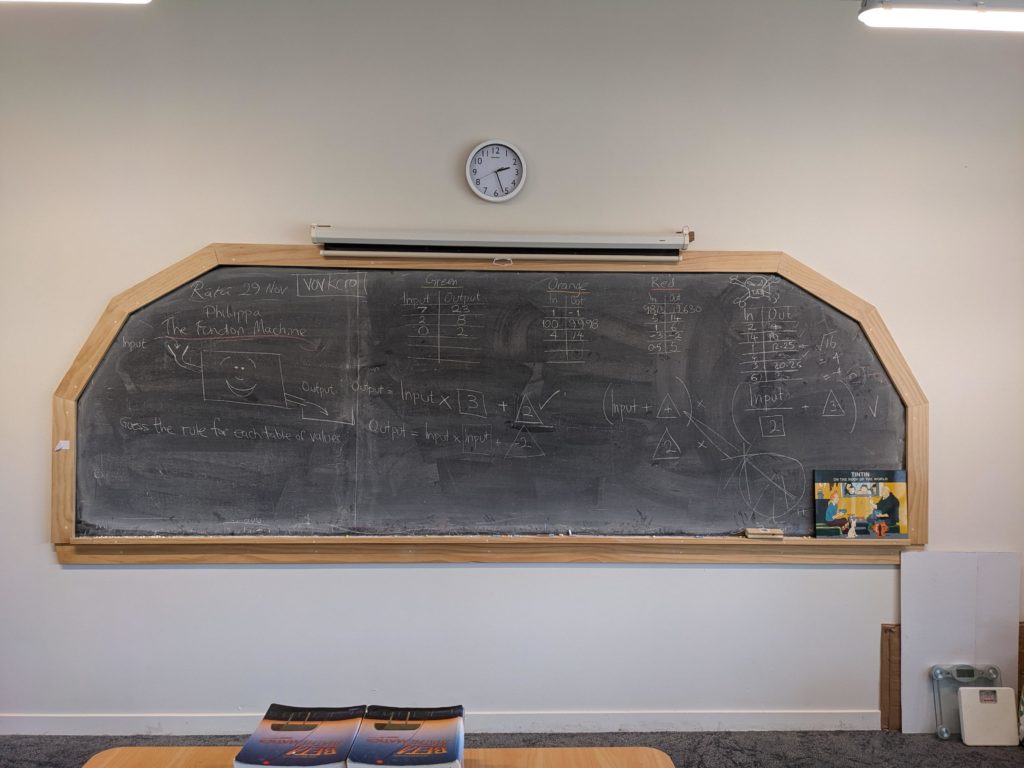
After visiting WSCS, I visited Titirangi Ruldolf Steiner School [Hereafter, TRSS] . Nestled in the Titirangi bush, the school has a very rural feel while being relatively close to urban Auckland. While the school is large geographically, set in native bush, it is relatively small by student population. Like WSCW student do not where uniform, and they have a similar high trust expectations of student behaviour. However, the similarities end there. Instead of a Modern Learning Environment, classes are traditional layout; class 7 (Y8) layout had students facing the front of the class. Class sizes are small, unlike MRGS and WSCW, which is possible because the school is private. Phones are banned from the school, either in put into the school’s safe or in a students bag till the end of the day. During break times students play twister, boardgames or chat with friends. Even whiteboards are eschewed for blackboards!
Classes stay together with their teacher through the junior school. Senior students stay with their class all day until they start to do different option subjects. Students are encouraged to use the outdoor environment as much as possible. Upper and Lower classes (Secondary and Primary) are often outside – they try to get outside rail, hail or shine. With the kindergarten they have camp kitchen. Speaking to Roelant, he said that he had done statistical investigations getting students out to measure leaves from plants from the ngahere which is part of the school. Their trigonometry unit is assessed through surveying, however it’s not an after thought; planning takes the opposite approach with Steiner education. First they plan the learning, i.e. teaching survery techniques and secondly decide what standards (if any) can fit around this.
Steiner schools try to build a love of learning. One of the ways that I observed this, is through the main lesson. All students at a particular year level do the main lesson. Class 12 (Year 13) were just beginning a main lesson on Chaos Theory. Classes complete a main lesson book which gets submitted for marking. The main book contains, notes, personal reflections and artwork that represent the topic. The main lesson is first thing in the morning when students are fresh, can go for several weeks and lasts for one hour 30 minutes. Although the Mathematics teacher was delivering the Chaos Theory main lesson, because the students take a variety of subjects (not all of them will take mathematics), the lessons are not to heavy on mathematics, and focus on many area of the curriculum including philosophy and logical thinking as well as English, Maths and Art. It also engenders a love for learning.
Lessons for MRGS?
I looked at many schools plans on the MoE website . Many of the schools create wharenui, wharekai and marae ātea for ceremonial and regular use. Having a beautiful space for the community, staff and students can uplift and inspire our tauira to aim higher. Wharekai can be used to build relationships between kaiako and tauira (literally breaking bread with students). Communities also benefit through continuing education and beautiful spaces to use for community events.
Lesson 1: Buildings can be more than just ‘places to teach and learn’ they can be life blood of a community
WSCW uses lots of project based learning and assessment. This is great for the students who already possess the skills, agency and self-motivation to tackle these tasks. Other students who are below the curriculum level, or do not have the same dispositions towards school will be left behind. In the debate on knowledge versus skills, these students often need to focus on knowledge first before they can engage in the skills based work. I see this often in my maths class as student do not have a good grasp of basic mathematical facts, and this hampers every other area of their mathematics.
Lesson 2: Innovative Learning Environments would not work for our most vulnerable students; pedagogy that works for these students needs to focus on improving their knowledge first
My time at TRSS proved to me that traditional teaching methods work. First is the mobile phone ban: I found the students at TRSS to be involved in board games or twister during the breaks or out walking or playing in the school grounds. Students were talking to each other, and they have a break from their devices at least for the school day. Second is that classrooms are traditional: They have the teacher at the front delivering a lesson, use blackboards to slow things down, and get students to write things down during their main lesson (at least).
Lesson 3: Traditional classrooms and teaching methods work!
Lesson 4: Our school should consider banning mobile phones during school hours
References
[1] A colleague pointed out that building these Modern Learning Environments might actually be cheaper than building traditional classrooms, and this might be one of the deciding factors for the MoE on the type of building to build. Moreover, they would most likely be cheaper to run with centralised heating, lighting and a lower surface area (cladding and roofing) to classroom space ratio.


