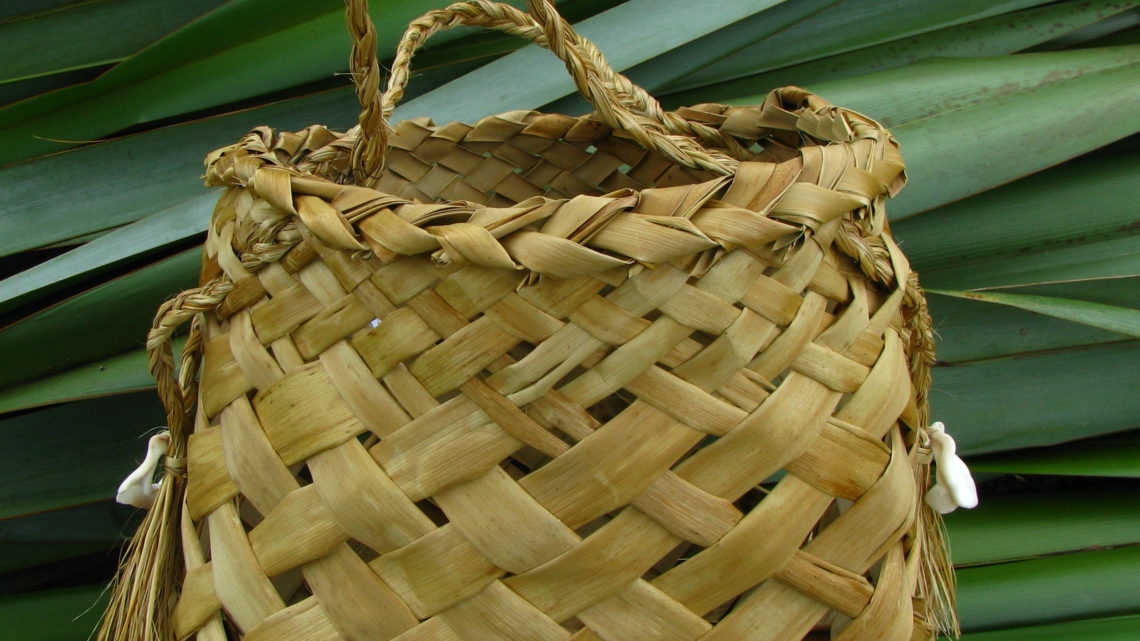
Carrying the kete
In te wiki o te kete, we were given the provocation: Who is helping to carry your kete? I understand it to mean either someone who is outside of the teaching profession who supports you, it might mean your mentor or it might be someone else at your kura. I am lucky enough to have support from all three to carry my kete.
My partner, Becky, is a great support, supporting me through assignments by giving me the space and time to get them completed. She is also a friendly ear outside of education to bounce ideas off. She would say she is maths illiterate (which is not true), so I will be testing lesson ideas with (on?) her.
I was lucky to be asked by the HOD of Mathematics who I wanted as a mentor. My mentor is a very, very effective teacher. She is firm but fair, and students find her very engaging. Some of the great pedagogy I’ve seen in the class have come from her. She introduces new vocabulary to tauira, and says things slowly, so that they have a chance to hear and play with the words. She also has a way of captivating tauira, so they are engaged with the lesson. I am absolutely looking forward to working with her again this year.
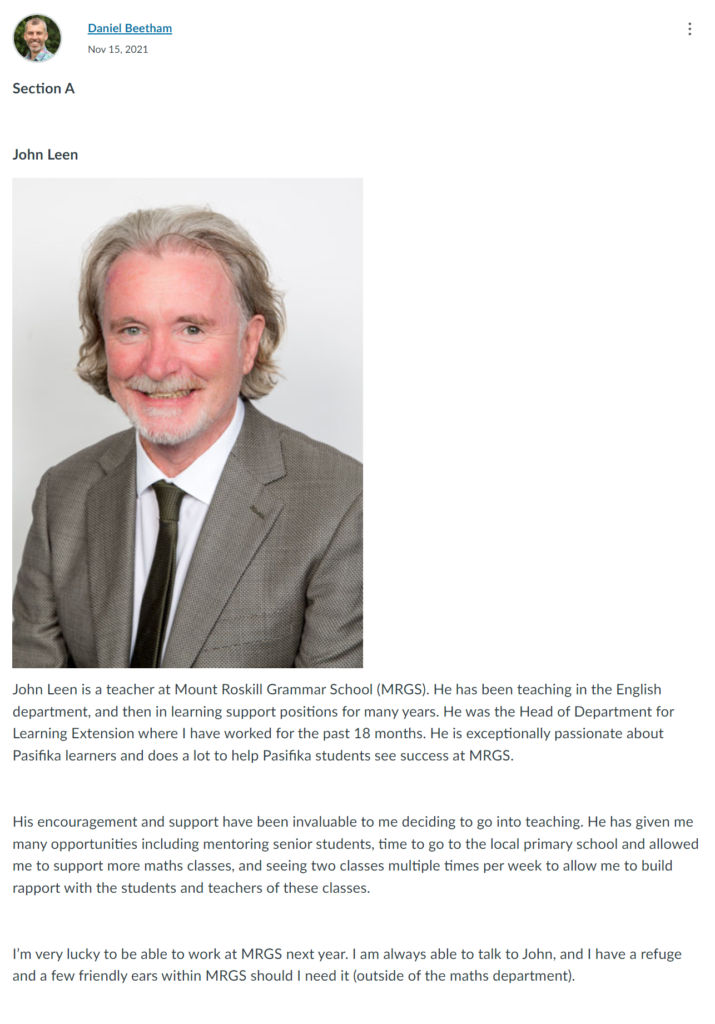
Finally, I have other members of staff at MRGS who I can go to. I’m lucky to have been working in the Learning Extension department at MRGS as a teacher aide for the past 18 months. In that time I have been some of the most well versed, dedicated, carring and funny members of staff. I can always go back to visit these teachers, and they have already been so supportive, giving me lots of resources, and holding a whole lot of posters, books and stationary until I get me classroom. I’ve outlined support that I received from John Leen, who encouraged me to go into a teaching career, and asked that I be put in mathematics classrooms when I decided that is what I’d like to teach.
Ki ngā kaiako pāngarau
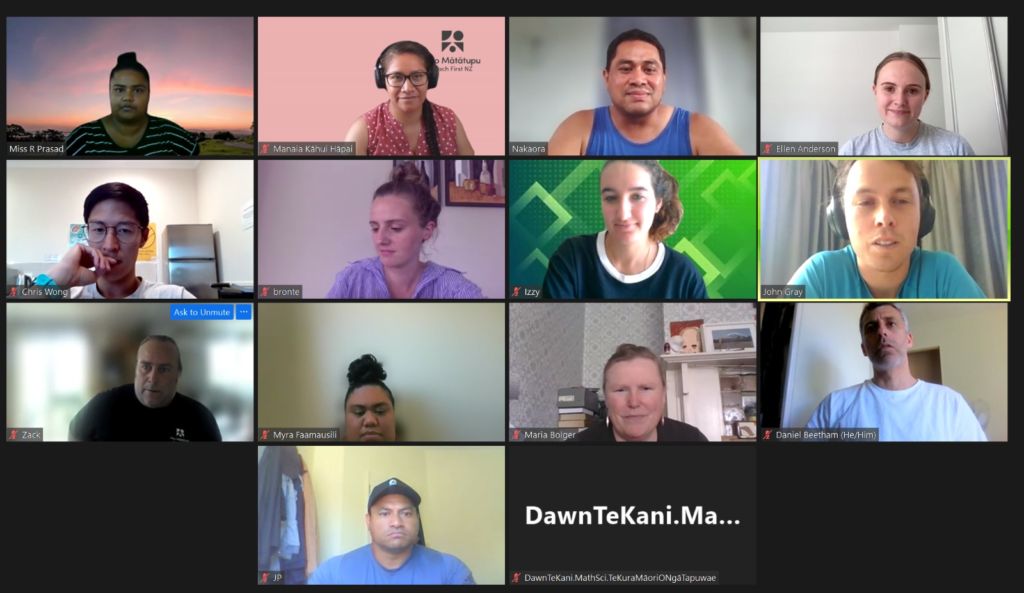
I am also lucky to have a supportive group of maths kaiako on my journey. I’m looking foward to making stronger curriculum connections with each of these teachers, who are, and will be great (yes, that includes you Myra, Ellen, John, Zack, JP, Maria B, Izzy and Bronte, Dawn and Chris!). I hope to share space with you doing the year! I look forward to our in person catch ups!
What’s in the kete?
Meta-teaching
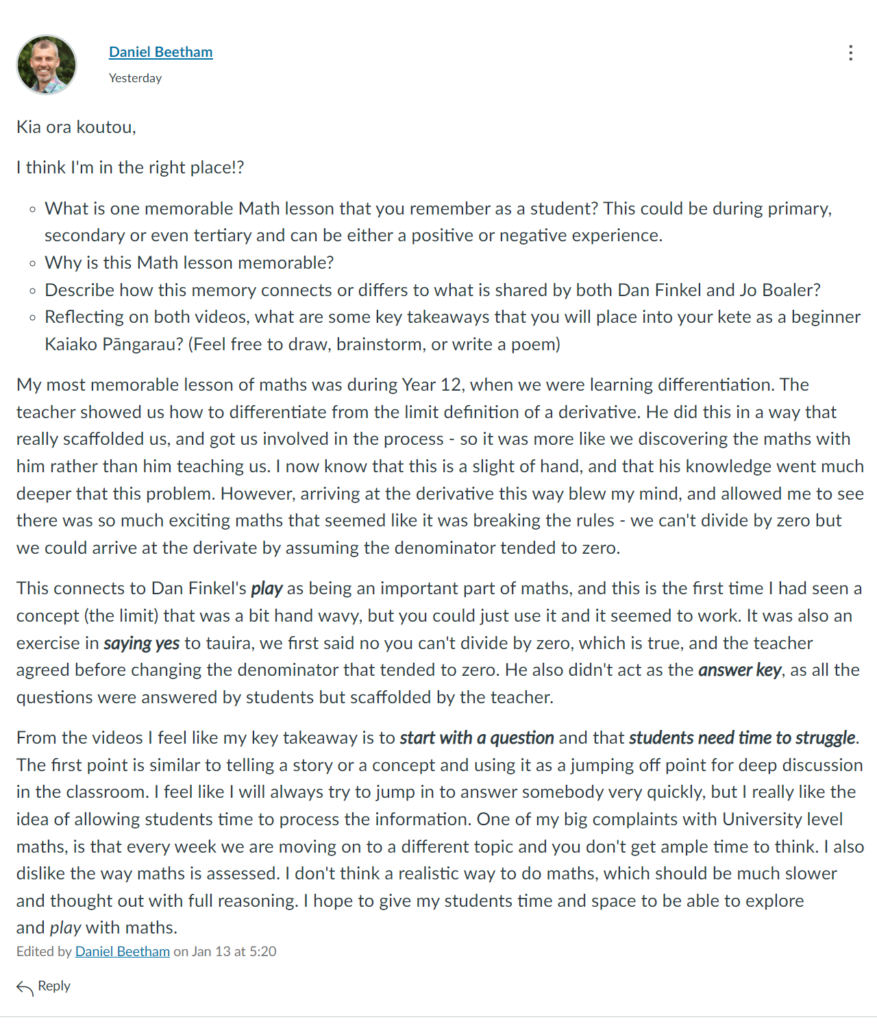
I’ve got two great videos that help remind me what is important in the classroom.
Lead with the heart…
I also love the way Jeff Duncan-Andrade [JDA] shares palabras about effective teaching. In this video JDA points out that the basic needs come first: “I frankly don’t give a shit if you can read if you don’t love yourself” (16:30). This reminds me that those basic needs come first before learning will be able to take place in my classroom, and to be kind to students that come in angry, hungry and despondent; there is a lot going on in these students lives outside of my classroom. It is also good to check in with students who appear to come into the class carrying themselves differently to normal, to give them a space to talk to you. JDA points out that the basic needs come first, then we can work on higher level needs .
…then with the head
Teaching Activities
Maria has given us a number of activities to take with us. I quickly created a Google Sheet which I’m able to update as I have more activities. They will need to be classified by topic and I’ll need to create links to the Google Slides in the Ako Mātātupu share drive.
Next Steps
I have thought about a number of next steps for myself over the next few weeks. These include making sure I am fully prepared for my classes, and will do the first week justice. I have also included where these action points meet the Key Teaching Tasks outlined in the Participant Handbook 2020 .
Prior to week one
I will do the following things prior to week one:
- Learn students names through the roles.
- Identify Māori and Pasifika tauira in my classes through the roles. (Key Teaching Task 1)
- Plan some lessons, using the context that tauira will be familiar with. I will find out more about their context when I start teaching them and during whanaungatanga. (Key Teaching Task 4)
- Read more about differentiation strategies to apply to my lesson planning. (Key Teaching Task 5)
- Find out what needs to be taught in Year 12 Mathematics, and catch up with any content I am unfamiliar with. (Key Teaching Task 6)
- Complete my school checklist (p. 69- 70)
- Get my teaching activities spreadsheet sorted (as above)
Te wiki tuatahi
The final thing to mention is what I can take from te wiki o te kete into week one at school:
- Whanaungatanga / Relationship building is important. I will provide ample time for this in my classroom. (Key Teaching Task 2)
- I will be friendly but firm (and smile!)
- Co-construct the rules or expectations in the classroom (Key Teaching Task 2 & 3)
- Listen and given time to tauira (Key Teaching Task 3)
As part of my introduction, I plan to do a short pepeha as an introduction of myself to my classes, which I also did last year when I taught a class. (Key Teaching Task 1)
Lastly I need to remember to have fun and that I will make mistakes!
I got this! 🤙🏼