Ko Pukekiwiriki te maunga Ko Manakau te moana Ko Ngāti Pākehā te iwi Ko Clayton Park taku kura tuatahi Ko Rosehill College taku kura tuarua
Ko Beetham taku whānau I te taha o taku matua, ko Dave Beetham rāua ko Elsie Roy aku tīpuna I te taha o taku whaea, ko Dennis Cochrane rāua ko Diana Kahn aku tīpuna Ko Grant Leslie Beetham rāua ko Karen Marie Cochrane aku mātua
Nō Papakura ahau
I tipu ake ai ahau i Papakura Kei Maungarei taku kāinga Ko Daniel Bryce Beetham tōku ingoa
Understanding my privilege
I cannot understand my roots without thinking about privilege. I am Pākehā which means that the land I live on was once inhabited by mana whenua and was often taken through force, unfair land deals or as the spoils of warfare. It also means it was my ancestors who took tāonga and almost destroyed a language. I acknowledge mana whenua and their struggle for justice for these (and many other) injustices. I also acknowledge that it’s not as simple as the coloniser having all the power and the colonised having none .
I am also male, cisgender, able bodied and straight. Therefore I conform to most of my society’s ‘norms’. I acknowledge this has given me a lot of privileges in life, that would not be afford to other people in our society. On top of that I was brought up in a middle class household, and while my parents separated when I was young (around three years old), I had a stable home to grow up in, enough food, a quiet, dry and warm room with a desk and a computer in the house. This makes it particularly important for me to know my roots and routes, because they may be very different to my tauira. I know that a lot of my students at Mount Roskill Grammar School [MRGS] will be have families that come from Pacific island nations (and may have be born there or in New Zealand) or will be Māori. Many will come from impoverished backgrounds. However, as I have learnt over my past two years at MRGS, the tauira are all eager to do well and usually feel really connected to the school. I have loved learning about the lives of my tauria and will carry this on, into the classroom next year.
Our session with MJ, Saviours, Allies and Co-conspirators, was confronting. I agreed with MJ that most of the lies about New Zealand being the land of milk and honey are just that: lies . On the other hand, I disagree with Duncan-Andrade that inequality is baked in by design. I agree that the system produces inequitable outcomes, but I think that is as designed. I take this to mean policy makers have the best intentions, and newer interventions may even have good outcomes (in isolation), but the practicalities of the wider system in which the policy maker works mean any changes they can make end up reinforcing current social-economic/educational conditions. That does not mean I should give up in the face of an overwhelming system, however, it just makes me keen to help my tauira as much as possible, and be the best classroom teacher that I can be.
Routes: Ngā autaki
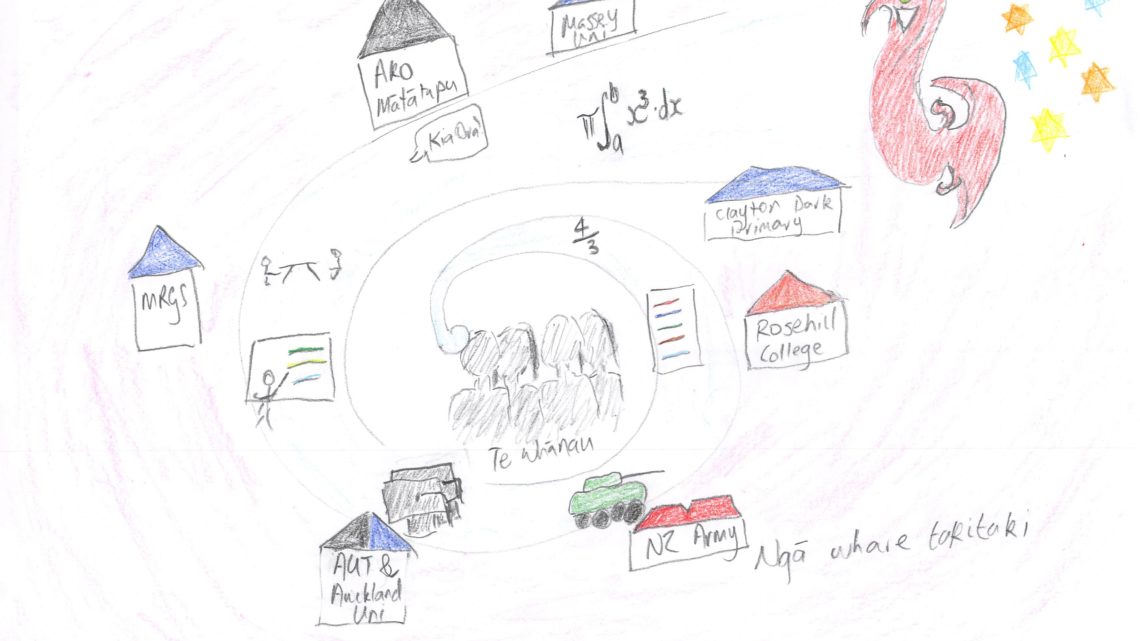
A drawing of my path to Ako Mātātupu
My journey to teaching has been a long one. Although it looks planned, or laid out in front of me in the picture above, it has been anything but. The picture really explains the journey via the educational institutions that have shaped me to where I am today, but does leave out some critical parts . This begins with my whānau, and moving through the kura I attended, the New Zealand Army, MRGS and then first meeting the Ako Mātātupu team while completing enough Mathematics papers to teach it at MRGS. I have drawn up to the time knowing that my kāhui hāpai is manaia (but not really knowing what a kākui hāpai was), with the stars representing the future unknowns.
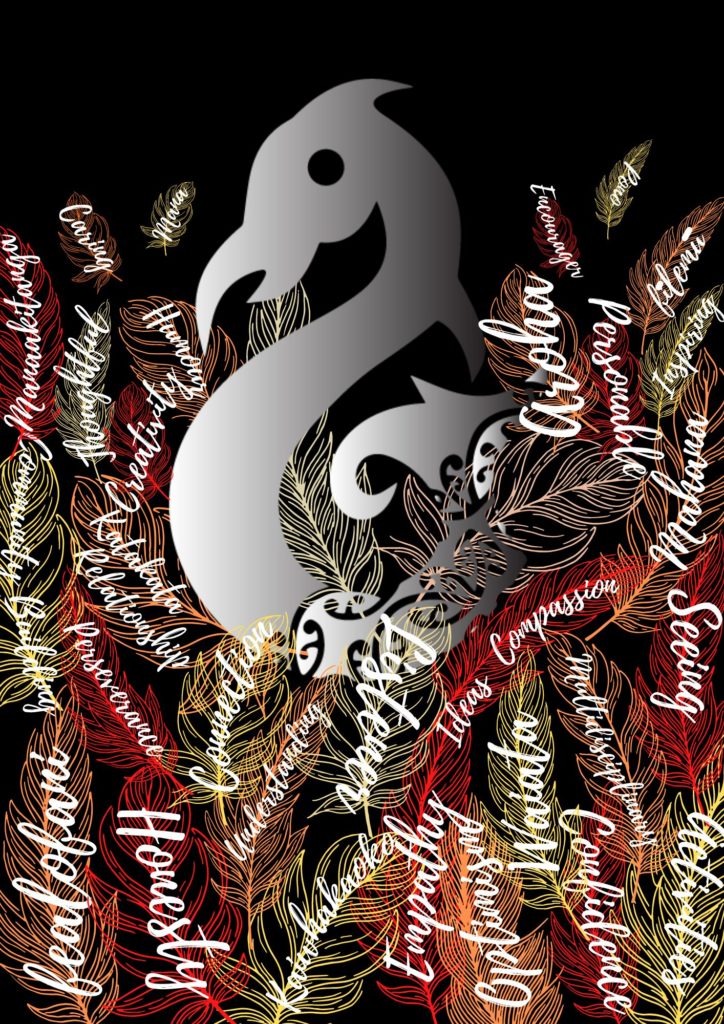
Manaia illustration from te wiki o te ahi
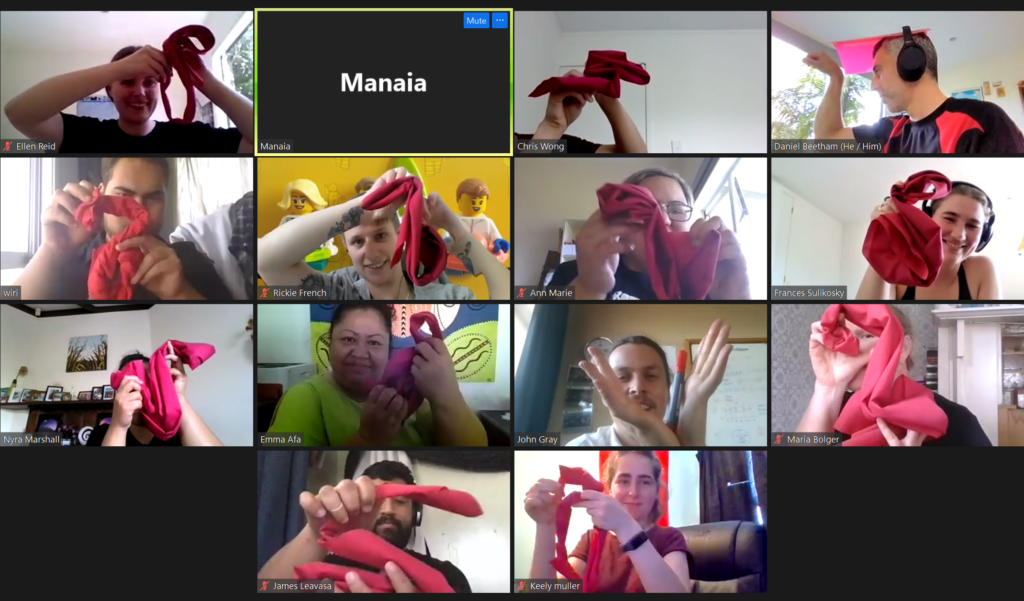
Manaia whanau handoverOne of our first tasks as a kāhui hāpai was to construct a Manaia
There have also been a variety of jobs that I have done over the years. The two main ‘careers’ I have had are in Electronics/IT, and in education. However, I’ve also worked in retail and in a bowls club, behind the bar. I find that I end up using a lot of the skills from my former career (IT) in the teaching profession. A lot of these skills have also been vital for the summer intensive, and I have also been able to help my fellow tauira on the course with calendaring, Google Docs and WordPress. The retail and bar work has also helped me relate to people, sometimes in difficult or tricky circumstances.
I think this gives me a range of different professional and personal experiences that I think help me to understand the different perspectives of our tauira. It is important, I think, to know your own tuarangawaewae so that you can understand others around you. This is also affirmed by Tātaiako’s Whanaungatanga competency, which states:
[Participants of initial teacher education and beginning teachers] can describe their own experience…[and] the impact of… their identity, language and culture (cultural locatedness) on relationships.
All these different explorations give me some basis for my Ako Philosophy. I am an explorer or navigator of different areas of my life. I want to give this same sense of wonder, exploration, love of learning and agency to my tauira in my classroom. I will do this by talking about giving my authentic self to the classroom, to give tauira space to develop themselves in the classroom and to allow tauira and whānau to help co-construct the classroom enviornment.
Why is this important?
Understanding our own cultural background helps us relate to other cultures. When we understand where we are coming from, we have a stronger sense of ourselves, and a base for understanding others. If we do not understand ourselves we would be dumbfounded when we come across cultural differences. We may also try to become our tauria, that is to say try to understand every cultural difference in the classroom. According to Bishop , this approach “often disallows that the most expert person…is the young person themselves”.
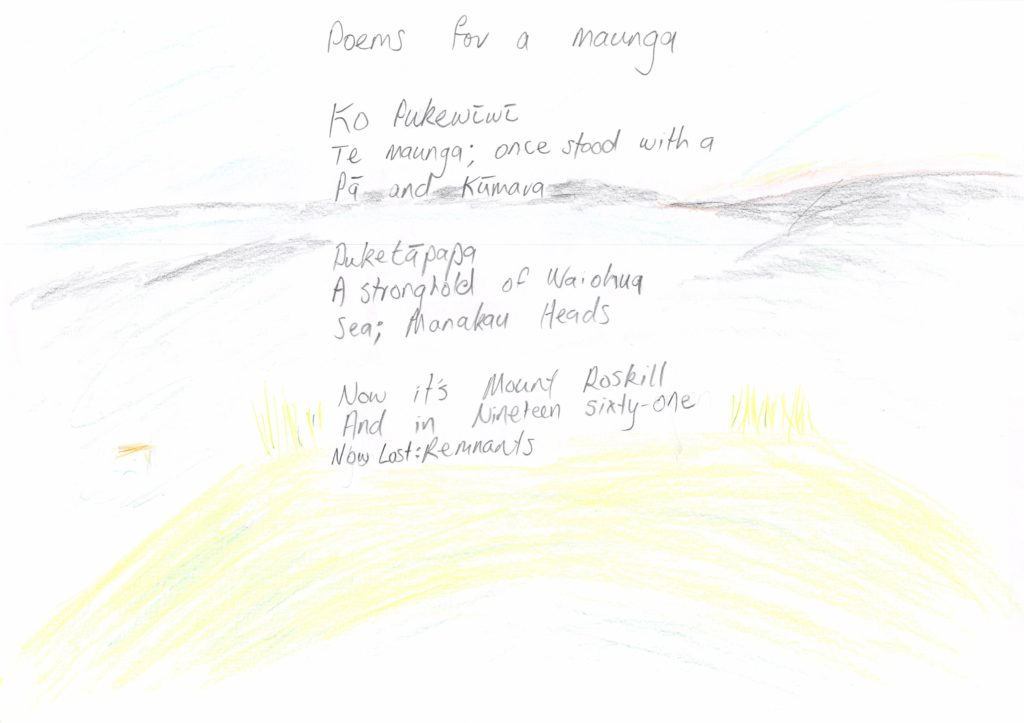
It is also important to uphold Mana Tangata, one of Ako Mātātupu’s values. Only by understanding where I fit it to a bicultural New Zealand, will I understand where Mana Whenua fit in as well. This includes learning about the “unique histories, heritages, languages and cultures” of tangata whenua . Following Tim’s (of Koru) lead, I climbed Puketāpapa and shared some kōrero around the orginal inhabitants and the three names of Puketāpapa. In the afternoon I shared the three short haikus I wrote about the maunga.
Puketāpapa
Three Short Haikus for a Manga: Pukewīwī, Puketāpapa and Mount Roskill
The Waiohua people once lived on Puketāpapa which is also known as pukewīwī. Tāpapa means to lie flat or prone, and therefore puketāpapa means a hill with a flat top. Wīwī is a type of grass, so pukewīwī means hill with wīwī grass. The puke looks out over the Manakau harbour which you can see in the picture behind the poem. In 1961 many of the historical sites on the maunga were removed to make way for a water reservoir . This maunga is near MRGS, and I hope to reference it and the people who lived here in a lesson. We may be able to use it for trigonometry, statistics, area and perimeter in the classroom.
Hoskins, T. K., & Jones, A. (2020). Māori, Pākehā, Critical Theory and Relationality: A Talk by Te Kawehau Hoskins and Alison Jones. New Zealand Journal of Educational Studies, 55(2), 423–429. https://doi.org/10.1007/s40841-020-00174-0
Kia ora, ko Daniel ahau! This is my space for sharing my Ako Portfolio. If you want to find more about about me, please visit my main website at danielbeetham.com